The Threat of the Open Sea
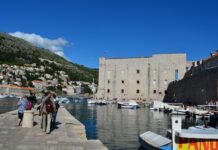
The greatest danger faced by the walls along the Sea of Marmara did not come from armies or siege engines, but from the sea itself. These walls stood directly on the shoreline and were constantly attacked by waves. Day and night, the water worked to weaken their foundations by washing away soil and striking the stone with great force. During storms, the waves became especially violent, hitting the walls with power that could slowly damage even the strongest masonry Travel Bulgaria.
This constant pressure from the sea explains many of the special features found in the construction of these fortifications.
An Irregular Design to Break the Waves
One of the most noticeable features of the sea walls was their irregular course. Instead of forming a straight line, the walls followed every curve of the coastline. They turned in and out with the shape of the shore. This design was not accidental. By avoiding long, straight stretches, the walls reduced the force of the waves striking them. Each section faced the sea at a slightly different angle, helping to break the power of the water and protect the structure.
In this way, the walls always presented a short and sharp front to the waves, rather than a long surface that could be battered again and again.
Protection at the Base of the Walls
The builders also took steps to protect the foundations of the walls. Along much of their length, a breakwater made of loose stones and boulders was placed in the sea at the base of the walls. These stones helped absorb the energy of the waves before they could strike the masonry directly The Meaning of the Word “Stadium” in Medieval Writing.
Ancient and medieval writers mention this feature, showing that it was well known even in earlier times. The breakwater played an important role in slowing the damage caused by the constant movement of the sea.
Use of Marble Shafts for Strength
Another important precaution was the use of marble columns built into the lower parts of the walls and towers. These marble shafts acted as strong bonds, helping to hold the masonry together. Marble is both heavy and durable, and its use in the foundations added strength and stability to the structures.
This technique shows that the builders understood the long-term dangers posed by the sea and took deliberate steps to counter them.
Later Construction Methods
A large portion of the sea walls was built using arched structures that were closed on the outer side. This style of construction suggests that much of the wall belongs to a later period, when new methods were used to strengthen older defenses. The arches helped distribute weight more evenly and added further support against the pressure of waves.
Gates Along the Sea Walls
The sea walls were not unbroken. They contained at least thirteen gates, which allowed access to the shore and the sea. These entrances were carefully placed and protected, as gates were always weak points in any defensive system.
The Gate of St. Barbara
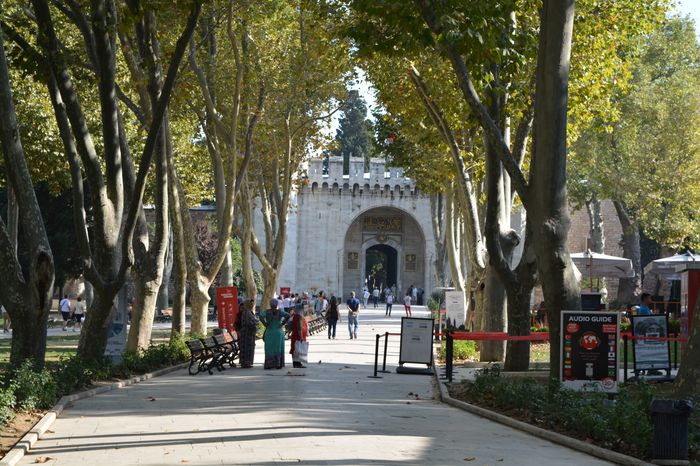
The first and most northern of these gates was Topkapı, located a short distance south of the tip of the promontory. In Byzantine times, it was known as the Gate of Saint Barbara. The gate took its name from a nearby church dedicated to Saint Barbara.
The presence of this church is especially meaningful. Saint Barbara was regarded as the patron saint of firearms and explosions, and her sanctuary was located near the Mangana, the great military arsenal of Constantinople, which stood just to the south of the gate. This close connection between religious belief and military function reflects the way spiritual and practical concerns were closely linked in Byzantine society.
The sea walls of Constantinople were carefully designed to resist not only human enemies, but also the relentless power of nature. Their irregular shape, stone breakwaters, marble reinforcements, and strong construction all show a deep understanding of the dangers posed by the sea. Together, these features helped the walls endure for centuries and played a vital role in the defense of the city.